Thursday, 1 August 2013

The Secrets Of High Octane Powered Engine Speeds


The Secrets Of High Octane Powered Engine Speeds

“High octane” is a term many might get a headache thinking about. And when throwing "physics" into the same sentence, one might quickly turn and run the other way. However, one need not worry in this case—here, brought to you by Greenball Tires, the physics of high octane power will be basic enough for any layman to understand.

We’ll start with the term “octane” first. Octane has to do with volatility, or, when speaking of fuel, the tendency to explode. It’s a general rule that the lower the octane number of fuel, such as 87, the easier the fuel combustion under pressure. Conversely, the higher the octane number, the harder it is for combustion. This is why high octane fuel is more expensive—high octane fuel’s trait of combustion less easily has been shown to extend the life of high-performance engines, and many of these engines require use of this higher octane fuel to function correctly.

When many people think ‘high octane fuel,’ they think ‘fuel that’s more explosive than regular fuel.’ Well, believe it or not, high octane fuel is less explosive than the fuels with lower octane levels, which is optimal for high-performance engines. The reason for this has to do with how an engine compresses gas. All car and truck engines have motors that compress fuel.

As many know, high-performance oftentimes means more horsepower. And higher horsepower means greater forces throughout the engine (where, then, more force throughout the engine means more force to the wheels, where the driver feels the resulting horsepower).

The forces we’re concerned with here have to do with the force of an engine’s pistons plunging into its cylinders. When an engine pushes a piston into a cylinder, fuel beneath it gets compressed. If the fuel has a low octane level, it combusts easier during this compression. With a high-performance engine, it is not good for fuel to easily combust as the crankshaft turns at higher-than-normal revolution per minutes. The pistons in these types of engines move so fast that if they don’t have a pocket, so to speak, of fuel that is harder to combust, the piston may hit the bottom of the cylinder, which can cause major engine problems. Keep in mind that with lower-powered engines, fuel that combusts easily is innocuous to the engine—because the pistons are cranked into the cylinder with less force, they are unable to slam against the bottom of the cylinder. So, ultimately, high octane fuel keeps a high revving engine healthy.

Friday, 26 July 2013

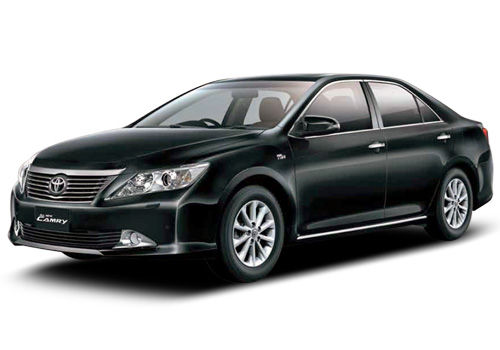
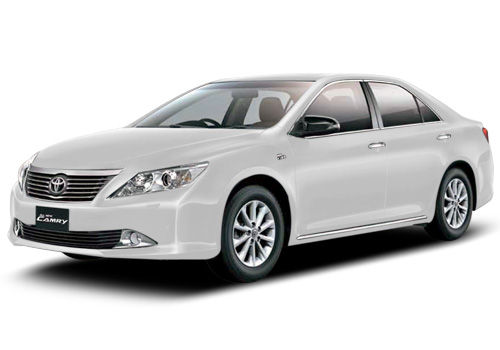
Toyota Camry Hybrid-Might Cruise To India


Toyota is planning to bring its Hybrid Camry in the Indian market. The car will use an unconventional fuel rather than relying on the non-renewable energy resources. This seems to be a good move as this will help in reducing the carbon emission on the Indian roads. The country has seen a huge upturn in auto-mobile owners and it has created a condition which yields in higher fuel consumption as more people are using their own cars and thus adding more on already greater pollution. The hybrid cars are the need of the time and the future of the auto-mobile market. The market, for such cars, seem less but will surely see a growth as more global players are planning to bring such vehicles. 


The prospect of hybrid vehicles are high though they are not getting the expected response as it was the case with many variants released into the market in recent times like that of Honda Civic hybrid which did not generate a phenomean response. Toyota Camry features an electric/petrol drive train engine which is low on carbon emission and high on mileage. This car is not a new entrant here as this was launched around a decade ago and has got a good customer base because of its efficient engine and higher luxury quotient. The Toyota Camry price is set to be around a little higher than the standard version but not much higher. 
 
The design of this Camry Hybrid is different from the standard engine not only in terms of peripherals but also in engine quality. The car has a very good design which has been refined to look even better as it is evident from Toyota Camry pictures which are available online. The front grill has been reduced in size and so are the bumpers. The headlamps are now wider. The engine is 2.5 liter Atkinson cycle with four cylinders electric cum petrol engine. The max power it generates, is 156 Hp at 5700 rpm coupled with a max torque of 156 lb-ft at 4500 rpm. This was good on power when it was first launched and this time too it is good. The secondary electric powered engine generates an extra of 105 kw and this adds up to a total power of 2000 hp. 


Being so heavy on power, this Camry hybrid has got good fuel efficiency as well. The mileage as on the city streets is around 20 kmpl which is close even on highways. The mileage, however, varies from variants to variants and this drops to a lowest in XLE models and the reason for this being the 17 “ wheels in it. The exterior are all too nice and has been kept intact. The interiors though has been tweaked a little to include more space in the cabin. For the record, the interior is decorated with leather seats, a stitched dashboard which adds to the elegant style. The ravishing Toyota car has been a global best-seller for the Korean auto-maker. The luxury sedan carries the legacy for which Toyota cars are popular worldwide. Let us hope that this will be launched across the globe at a reasonable price soon.

Shweta Aggarwal is a guest author and sharing the news about hybrid carswith Hybridcarfuture's readers. Toyota is planning to launch it's new hybrid car Toyota Camry.

Saturday, 20 July 2013

How To Prevent Car Theft

In America, the car is so much more than transportation from point A to point B. Cars symbolize freedom, success, independence, and innovation. For collectors, they provide a cherished connection to our history and art. Unfortunately, the beautiful automobiles that are prized collectors' items are also magnets for thieves. So, how can you keep your four-wheeled treasure secure? Follow these easy tips:

Remove Temptation

While the theft of an entire car is a tragedy, it's much more common for thieves to break in, stealing just a few valuables from inside. Despite not taking the whole vehicle, these smaller thefts can still result in major damage. Harm may come to a meticulously applied custom finish, or to locks with which the thieves have tampered. Often windows have to be replaced. Repairing this damage can be shockingly expensive. Therefore, it's much wiser to remove or obscure items that thieves find alluring. Empty change receptacles, remove the face plate from expensive stereos- and never, ever, ever leave keys, cell phones, or computers within sight.

Park Smart

Thieves thrive on seclusion. Many of them are expert at quickly entering a car before driving off within a matter of minutes. Accomplishing this is much easier under the cloak of darkness, when no one is likely to be watching. If you're parking in the street, it's always best to do so in areas where there is lots of foot traffic. Or, try to park your car in front of an open business. Avoid desolate back streets. When in doubt, paying to park in a well-monitored lot is worth the price of admission.

Keep Your Eyes Peeled

In areas where exceptional vehicles are the norm, theft is a constant risk. Professional thieves often assess a neighborhood for juicy prospects before they do the deed. If you notice strange cars parked along your block for unusual amounts of time, or unfamiliar characters lurking around the neighborhood, take heed. They may be casing the joint. Call your local law enforcement agency to do a safety check. If their motivations are legitimate, the people in question will be cooperative. If they had any kind of malevolent intent, they'll be scared off. The important thing is to be very aware, and to let unfamiliar figures know that you're alert. They'll move on to an easier target.

Take Shelter

If your car is a collector’s item or simply a special vehicle that you value greatly- it's worthwhile to park it in a secured facility. This option provides the penultimate in theft protection since your car is safely tucked away in a secure enclosure, rather than being exposed in your own driveway. Additionally, shiny paint jobs and gleaming fixtures are all protected from the elements in a unit such as Houston TX self storage. You'll have the freedom to bring your car out for Sunday drives, or special events- but you'll never have to worry about calamity striking when you least expect it. When you love your car, it's absolutely worth it. You can learn more about safe storage for your vehicle at

http://www.extraspace.com/Storage/Facilities/US/Hawaii/Honolulu/1000000225/Facility.aspx

Sunday, 30 June 2013

4 Keys To A Happy Car

Many people rely on a car each day for work and for entertainment. Cars make it possible to get to locations that are inaccessible by any other means. A happy car provides safety, reliability and high performance. There are four keys to maintaining a happy car.

1. Drive Responsibly


Maintaining a happy car means driving in a way that does not place unnecessary strain on the different parts of the vehicle. Actions such as frequent and hard breaking and sudden acceleration will both start to wear down components like the brakes and the transmission. Drivers need to handle the car in a way that allows the engine, transmission and other parts to operate as intended. This will keep the car happy while also reducing the need for repairs and extending the life of the vehicle.

2. Maintain Fluids


The different fluids that are used by the various parts of the car need to be checked and refilled as necessary even between scheduled service visits. Oil is very important. The levels should be checked regularly since levels could drop suddenly if a problem occurs. Transmission fluid keeps the system from overheating. The fluids might need to be completely replaced between service visits. This is because the heat of the car and time will eventually change the basic properties of the fluids and make them less effective.

3. Regular Professional Maintenance


A happy car is a vehicle that is well maintained. This means taking the vehicle in for professional service according to the manufacturer recommendations. This could be after a certain amount of time or after a certain number of miles. Regular maintenance includes replacing important items like air filters or brake pads when necessary. Maintenance technicians will also replace damaged parts like leaking hoses, worn spark plugs and frayed electrical wires. This regular maintenance will keep the car happy and working as efficiently as possible.

4. Tire Care


Tire care is essential for a happy car. The first step is to use a tire size calculator to determine the optimal size of the tires for the car. Changing the tire size can improve safety and fuel efficiency. The tires need to be inflated to the correct level for the season. Tires need to be aligned regularly to prevent unnecessary strain on the transmission and brakes. Tire rotation improves handling and traction. Tires also need to be changed according to the season in order to get the best performance possible.

Maintaining a happy car means paying attention to some of the small signs that a problem might be developing. This includes unusual noises and smells as well as inconsistent performance. Taking care of these small problems will keep the car running happily for a long time.

Author Bio:

Jayla Barnsen is a freelance blogger from Eugene, Oregon. She writes on a variety of topics, including cars, saving money and the great outdoors. This article was co-authored by Rhett J. Stone.
+Jayla Barnsen 

Wednesday, 26 June 2013

The Top Three Reasons for Car Accidents

Cars are an essential part of American life. They get you where you need to go, but they can be dangerous when drivers don't operate them properly. Around 10 million car accidents occur every year in the United States, and accidents can cause serious or fatal injuries to the driver and passengers. Most wrecks could be prevented by avoiding some of the major causes of car accidents.

Distractions

Nowadays, people have more electronic gadgets than ever before. Mp3 players, cell phones, and GPS systems are a part of everyday life, but they can also be a major distraction while you're behind the wheel. Many states have outlawed the use of electronic devices while driving, but the problem persists.

Teenage drivers are especially prone to text messaging while driving, and this makes them four times as likely to get into a crash. Drivers need to keep both hands on the wheel and their eyes on the road. Cell phones should be turned off before you get in the car. Although it may seem convenient, eating in the car is also a major distraction, and you should avoid it.

Drunk Driving 

Drinking impairs a person’s judgment and senses. Driving Under Influence or DUI is responsible for a large percentage of car crash fatalities.

In addition, driving under the influence can result in arrest and serious legal problems, including prison sentences. If you've consumed any amount of alcohol, it's not a good idea to drive, even if you don't feel drunk. Find a designated driver before heading out for a night of partying, and take the keys away from someone who's attempting to drive drunk. They might be angry with you at the time, but they'll thank you for it later.

Speeding

People often speed because they're in a hurry, but causing a fatal accident is far worse than being a few minutes late. When you're traveling over the speed limit, it's harder to stop or control your car should something unexpected happen.

Speed limits are posted to make driving safer, so you should follow them. Limits are generally lower in school zones or neighborhoods to avoid hitting pedestrians. Following the speed limit will drastically decrease your chances of causing an accident, and according to Engine Repair in Houston, totaling your car.

Monday, 24 June 2013

Car Safety Tips for Kids

Well before I get to my point, I must tell you about how important are kids in our lives. I live in Lahore, Pakistan and enjoying my life with my parents. Currently, I am working with a Japanese used cars exporter. I have no sibling that means I am the only attraction of my parents in this world. That is way I faced many restrictions in my childhood. I was not allowed to go outside as commonly as my other friends could move and play different kind of games. Few months ago I had a negative feeling that why my parents were so strict or careful about me? But soon I found my answer through an incident.

Mr. Obaid is our neighbor living with his wife. They don’t have kids but the story wasn't the same 3 month ago. Mr. Obaid came to my home 4 months ago and asked me to suggest him a family or passenger car. I suggested him a car and they bought it after 15 days from my company’s showroom. As my social responsibility, I advised Mr. Obaid to keep all the precautions while driving a car including seat belt, door checks, wheels air etc. But He didn't paid attention to what I was talking about. In the first weekend after buying a car they went out for a picnic party to the nearest park. Mr. Obaid was driving, his wife was sitting on the back seat and a son with the age of 7 years was sitting on the 2nd front seat along with his daddy. The blunder my neighbor made that they didn't fastened the belt of their son and moreover the Mr. Obaid was driving at a speed of 75 to 80 miles per hour.

What happened was horrible and depressing. My neighbor’s car ran into a pickup truck and due to instant break, Mr. Obaid’s son came out from the front window by breaking it and died on the spot. That was really not worth telling what situation I saw there and in the hospital or in their house after the death of their beloved son.

But the question is that what made this accident to happen? What was the cause? Was it due to over speeding? Answer to all these questions is that only negligence made Mr. Obaid and his wife to live without their son.

Now, I am going to tell you about some precautionary measures or tips to keep your kid safe while driving and not to commit serious mistakes like Mr. Obaid did. Please have a glance on the tips below.

Car Safety Tips For Kids


1. Keep Your Younger Kid With You:

It is very important to keep the younger kid from 1 year to 6 or 8 years with you or if this is not possible then keep your kids at the backseat, install a child restraint (you can find anywhere in your local market) and fastened the belt.

2. Seat Belt (Double Check)

Fasten the seat belt of your kid and before moving, double check it because sometimes you do not pay attention in first time.

3. Lock The Doors  

It is very important to lock the back seat doors and try to keep your child away from the door lock because kids have the tendency to play with the door lock.

4. Turn off The Music Player And Car TV

I feel very bad about those people who have ruined their lives by losing their loved ones just due to some negligence. Car music and TV are some of the big attention grabbing objects. So, when driving a car, turn off your TV which is visible to the driver. It is recommended to lower the level of volume of music too because you have to listen every voice of your kid behind your seat.  

5. Keep Your Child Away From Airbag

Although airbag is for the safety yet it is only designed for the adults not for the children. They are very power full when inflated and they can injure a kid very badly. Airbag’s placement in the car is too low which can be a reason of suffocation. So, always place your child at the backseat.  

6. Don’t Keep Hard Things/Metal Along With Child Seat

Study tells that the child’s skin or body is more sensitive than an adult. So, don’t keep any hard thing or metal along with the child restraint or seat.  On the time of instant break or accident these things can make very dangerous damages to your child.

7. Always Pull Over When Kid Drops Something 

Survey found that very high percentage of people tries to pick up dropped things during driving which is very harmful. It is highly recommended to pull-over your car before picking up a dropped thing by your child.

8. Keep Small But Dangerous Things Away

It is experienced that people who smoke usually give their lighters to their child as a playing objects. This is very hard to believe but it happens. If you smoke and have a lighter so keep it with you and do not give it to your kid or do not keep it near to your child.

9. Keep Checking Your Kid 

  Don’t leave your child unattended. Children can do serious damage with themselves. So, keep checking your child by pulling over your car when at a long journey.

So, these were some of the important tips and precautionary measures during driving a car with a child.  I hope I have helped many family oriented people by writing this article. Kamran, the son of Mr. Obaid was just like a younger brother to me. I still remember that when I got a car in a reward to my promotion as a Marketing Manager, Kamran saw my car and said that I will also find an exporter of Japanese used cars, work with them and will get a car in a reward of my hard work.  I dedicate this article to him and I request all the parents to follow these instructions and tips to have a safe journey. You kids are your life so don’t ruin your life.

 Make it as happy and safe as you can with your children.

Saturday, 22 June 2013

Five Things You Need To Know Before An Accident Happens

Car accidents are scary. The worst part is that they often occur when you least expect it. Being involved in a crash could mean living with permanent physical injury, psychological instability, or worse. Even when it is impossible to prevent a car accident from happening, there are ways to prepare yourself for the worst before it happens. Here are five things that you should be aware of, the next time you enter your vehicle.

1) Keep a notepad and pen in your glove box

It's always a great idea to have pencil and paper in the car because you never know what you might need to jot down. If you find yourself in a mess of metal and glass, record important bits of information so that the whole thing can be sorted out more quickly later. Document the time of the accident, the date, the location, and nearby businesses or landmarks. If you are involved in a crash with another vehicle, write down the license plate number, driver's license number, driver's name, and anything else you find to be important. All of this information can be very useful for rescue workers, law enforcement, legal workers, or anyone else who is called to the scene.

2) Ask witnesses what they saw

When two vehicles collide, it is usually the fault of one of those drivers and not both. Being blamed for an accident can have some unsavory consequences, like getting an increase in car insurance rates and not having the cost of the car damage covered by your insurance provider. To help get the story straight on your end, talk to bystanders to get their accounts of what happened. If you can have someone confirm your story in court, you should be in the clear.

3) Purchase car and health insurance if you don't already have it

If you don't have this "cushion" in place before the blow, you might find yourself in deep financial trouble. Having to pay for car damages out of your own pocket, and medical bills can become overwhelming. Be sure to look in depth at any insurance agency and what policies they can get for you.

4) Store a first aid kit in the car

Car crashes can cause minor to major physical trauma. You could suffer anything from a small scratch or bruise, to severe puncture wounds and lacerations. A first aid kit can be used to sanitize a wound, control the bleeding and more, keeping one on hand could mean the difference between life and death.

5) Have a car accident attorney on call

Car accident attorneys can be extremely helpful during your time of greatest need. These lawyers specialize in helping you get compensation for injuries and vehicle damage. You will find them to be of major assistance if you are involved in a major car accident. Find one easily by doing a local search like, “Car Accident Lawyer Pensacola”.
+Brooke Chaplan